

Introduction
Joint pain affects people everywhere — young and old, active workers and those who sit for long hours. It can make simple tasks like walking, climbing stairs,
sitting, and sleeping uncomfortable. The good news: small, consistent changes in food, movement, and daily habits can reduce pain and help joints recover.
This article gives clear, safe, and practical guidance: the best foods to reduce inflammation, simple exercises to strengthen joints, and useful home remedies.
and easy daily tips anyone can follow.
7 Best Foods for Joint Pain Relief
Turmeric is one of the most trusted natural ingredients for reducing inflammation.
It contains curcumin, a powerful plant compound known for its ability to calm swelling and support long-term joint comfort.
Even small daily amounts of turmeric can help your joints feel more relaxed and flexible.
Why Turmeric Helps Joint Health
- Helps reduce swelling and stiffness
- Supports long-term joint comfort
- Useful for everyday mild discomfort
- Natural and safe when used in small amounts
How to Use Turmeric
- Add ½ teaspoon to warm milk or warm water once a day
- Combine with a pinch of black pepper to improve absorption
- You can also add turmeric to soups, curries, or warm drinks
Small, consistent consumption works best.
Final Useful Note
Turmeric is a simple, affordable, and natural way to support joint health.
Daily use can help your body manage inflammation more effectively over time.
2. Omega-3 Rich Foods — Smooth Joint Movement
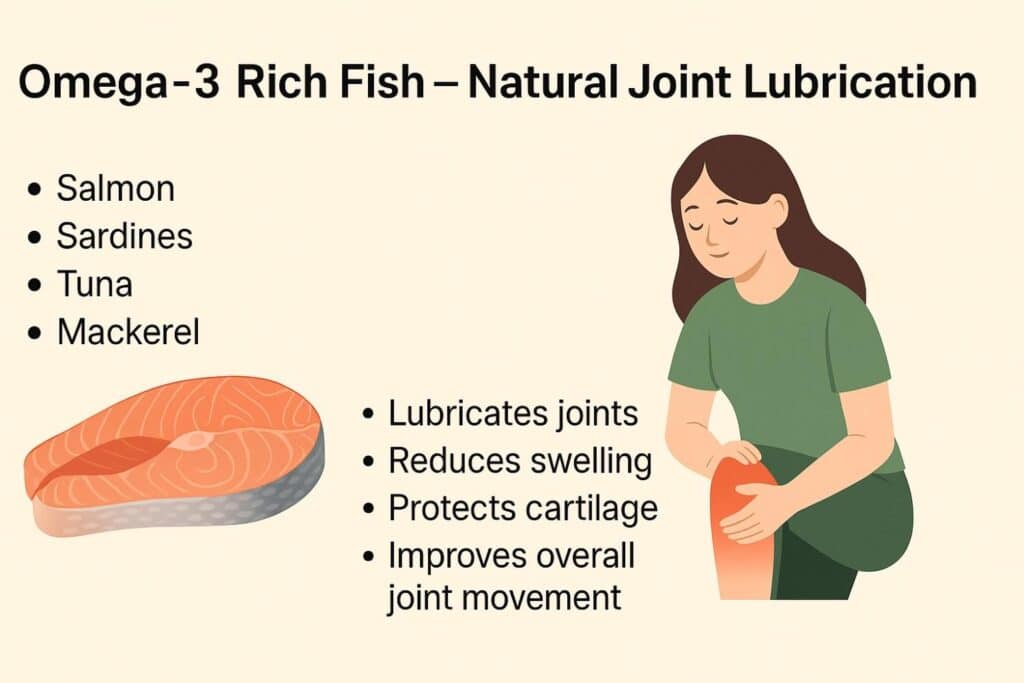
Omega-3 fatty acids are essential fats that help reduce inflammation in the body.
They support joint lubrication, protect cartilage, and make everyday movement more comfortable.
People who include omega-3 foods regularly often experience less stiffness and improved flexibility.
Why Omega-3 Helps Joint Health
- Supports natural joint lubrication
- Helps reduce everyday stiffness
- Protects cartilage from wear
- Supports long-term joint comfort
Best Omega-3 Rich Fish
These fish contain high levels of omega-3:
- Salmon
- Sardines
- Mackerel
- Tuna
Even 2–3 servings per week can be helpful.
Vegetarian Omega-3 Sources
If you don’t eat fish, you can still get healthy omega-3s from:
- Chia seeds
- Flax seeds
- Walnuts
- Pumpkin seeds
1 tablespoon of seeds or a small handful of nuts daily is effective.
Benefits
- Improves joint lubrication
- Reduces stiffness
- Supports overall mobility
Final Useful Note
Adding omega-3 foods regularly is a simple and natural way to support joint comfort and healthy movement — for all ages.
3. Ginger — Warming Natural Soother
Ginger is one of the most effective natural ingredients for reducing everyday joint discomfort.
It contains a compound called gingerol, which helps lower inflammation and supports better blood circulation around the joints.
Because of its warming nature, ginger helps relax stiff muscles and makes movements feel easier.
Why Ginger Helps Joint Health
- Reduces mild inflammation
- Improves blood flow to stiff joints
- Helps ease everyday pain and tightness
- Supports overall flexibility
How to Take Ginger
You can include ginger in simple ways:
- Drink ginger tea once or twice a day
- Add grated ginger to soups, curries, or stir-fry
- Chew a small fresh piece of ginger daily (if comfortable)
Even small amounts taken regularly support long-term joint comfort.
Final Useful Note
Ginger is easy to add to your routine and works gently.
Consistent daily use can help your joints feel more relaxed and comfortable.
4. Berries — Antioxidant Protection
Berries are rich in antioxidants and vitamin C, which play a key role in keeping your joints healthy. These nutrients help protect joint tissues from damage caused by inflammation and everyday wear.
Berries also support the body’s natural repair process, helping joints stay flexible and comfortable.
Why Berries Are Good for Joints
- High in antioxidants that fight inflammation
- Rich in vitamin C, which supports collagen (important for cartilage)
- Help protect joint tissues from long-term wear
- Support recovery and overall joint comfort
Best Berries for Joint Health
- Blueberries
- Strawberries
- Raspberries
- Blackberries
If berries are not available, any vitamin C–rich fruit works well — such as oranges, kiwi, pineapple, or amla.

Benefits
- Protect cartilage from damage
- Support tissue repair
- Help reduce inflammation naturally
Final Useful Note
Adding even one small serving of berries or vitamin C–rich fruits to your daily routine supports your joints by keeping tissues strong and healthy.
5. Olive Oil — Natural Anti-Inflammatory Fat

It contains natural compounds like oleocanthal, which work similarly to mild anti-inflammatory agents and help reduce everyday joint stiffness.
Why Olive Oil Helps Joint Health
- Supports smooth and comfortable movement
- Helps reduce mild inflammation in the body
- Protects joint tissues over time
- Provides healthy fats that support overall mobility
How Much to Use
1–2 teaspoons per day is enough.
You can add it to:
- Salads
- Cooked vegetables
- Soups
- Light meals
Simple Ways to Add Olive Oil
- Use as a salad dressing
- Drizzle over cooked dishes
- Mix into soups after cooking
- Use for light sautéing
Final Useful Note
Using a small amount of extra virgin olive oil daily is a simple step that supports joint comfort and long-term mobility without any complicated routine.
How much
1–2 teaspoons daily as part of meals or salads.
6. Leafy Greens — Strength & Nutrients
Leafy green vegetables are some of the best foods for keeping your bones and joints strong. They are rich in essential vitamins and minerals that support daily movement and long-term joint health.
Why Leafy Greens Are Good for Joint Health
- Provide calcium for stronger bones
- contains vitamin K, which supports bone and cartilage structure
- Offer magnesium for muscle relaxation
- Rich in antioxidants that help reduce inflammation
- Support overall mobility and flexibility
Best Leafy Greens
- Spinach
- Kale
- Broccoli
- Collard greens
- Swiss chard
Each of these provides nutrients that keep joints healthy and active.
Simple Ways to Include Them
- Add spinach or kale to salads
- Use broccoli in stir-fries or soups
- Add a handful of greens to smoothies
- Steam greens as a side dish
Final Useful Note
Adding even a small portion of leafy greens daily can support stronger bones, smoother movement, and better joint comfort over time.
7. Nuts & Seeds — Small Powerhouses
Nuts and seeds may look tiny, but they contain some of the most important nutrients for strong, flexible, and healthy joints. They provide healthy fats, minerals, and antioxidants that support long-term joint comfort and mobility.
Why Nuts & Seeds Are Good for Joint Health
- Rich in omega-3 fatty acids, which help reduce inflammation
- Provide magnesium, supporting muscle and nerve function
- contains vitamin E, which protects joint tissues
- Offer plant-based protein, supporting muscle strength
- Help maintain a healthy weight, reducing pressure on joints
Best Nuts & Seeds for Joint Support
- Almonds – rich in vitamin E
- Walnuts – an excellent source of omega-3
- Chia seeds – support lubrication and flexibility
- Flax seeds – help reduce inflammation
- Sesame seeds – contain calcium for bones
How Much to Eat
A small handful of nuts or 1 tablespoon of seeds per day is enough to support daily joint health.
Simple Ways to Add Them to Your Diet
- Add to smoothies
- Sprinkle on salads
- Mix into yogurt or oats
- Eat as a light snack
- Add to homemade energy balls
Final Useful Note
Including nuts and seeds daily is a simple habit that adds powerful nutrients to your diet—helping your joints stay flexible, comfortable, and strong as you go through your day.
7 Simple Exercises for Joint Pain Relief
These exercises are gentle, safe, and suitable for most adults and seniors. Move slowly and stop if pain increases. Consult a healthcare professional for severe symptoms.
1. Leg Raises — Knee Strength
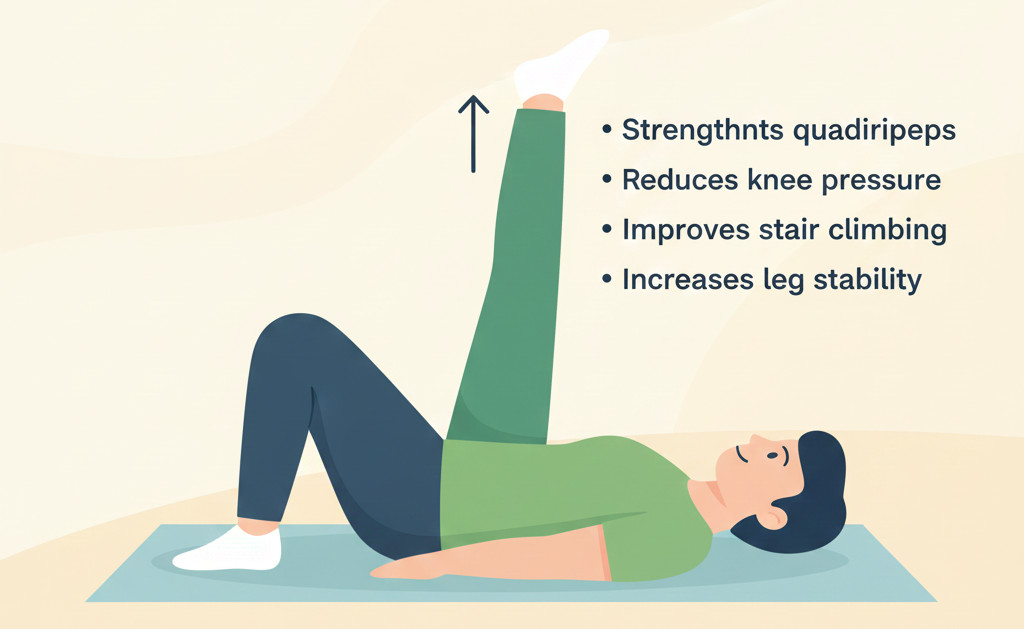
Leg raises are one of the best gentle exercises to strengthen the muscles that support your knee joint.
They help improve stability, reduce pressure on the knees, and make daily movements feel easier.
How to Do
- Lie on your back on a mat.
- Keep one leg straight and bend the other knee.
- Lift the straight leg slowly to a comfortable height.
- Hold the position for 3–5 seconds.
- Lower the leg slowly and with control.
- Repeat 10–15 times on each leg.
Benefits
- Strengthens thigh (quadriceps) muscles
- Reduces pressure on the knee joint
- Helps improve walking and stair climbing
- Increases leg stability
- Supports knee alignment and balance
- Safe and effective for beginners and seniors.
2. Ankle Rotations — Mobility
Ankle rotations are one of the simplest and safest movements to improve mobility in the ankles, knees, and lower legs. This exercise is especially helpful for people who experience morning stiffness or discomfort after sitting for long hours.
How to Do
- Sit comfortably on a chair.
- Lift one foot slightly off the ground.
- Rotate the ankle clockwise 10 times.
- Rotate anti-clockwise 10 times.
- Repeat with the other foot.
Benefits
- Improves ankle flexibility
- Reduces stiffness in the legs
- Enhances blood circulation
- Helps reduce mild swelling
- Supports better walking stability
- Relieves tension from long sitting or standing
- Great warm-up before walking or exercise
3. Arm Circles — Shoulder & Neck Relief
Arm circles are a simple and effective movement to loosen tight shoulders, reduce neck stiffness, and improve upper-body flexibility. They are especially helpful for people who work on laptops, use mobile phones for long hours, or experience tension from poor posture.
How to Do
- Stand or sit straight with a relaxed posture.
- Extend both arms sideways at shoulder height.
- Make slow forward circles (10–12 repetitions).
- Then make slow backward circles (10–12 repetitions).
- Keep your movements gentle and controlled.
Benefits
- Reduces shoulder stiffness
- Relieves neck tension
- Improves posture
- Enhances upper-body flexibility
- Increases blood circulation to the neck and shoulders
- Helps reduce discomfort from long hours of sitting or desk work
4. Cat–Cow Stretch — Spine Flexibility

The Cat–Cow stretch is one of the best gentle movements to improve spine flexibility.
It helps loosen tight muscles in the back, neck, and shoulders, making everyday movement feel lighter and more comfortable.
This stretch is safe for beginners, seniors, and anyone with a stiff back from sitting long hours.

How to Do
Start on your hands and knees in a table-top position.
Inhale:
- Arch your back downward
- Lift your head and tailbone upward
- (This is the Cow Pose)
Exhale:
- Round your spine upward
- Tuck your chin toward your chest
- (This is the Cat Pose)
Benefits
- Improves spine flexibility
- Reduces back and neck stiffness
- Relieves tension from long sitting
- Enhances posture
- Increases blood flow to the back muscles
- Helps relax the mind and reduce stress
5. Wall Sit — Leg Endurance
The wall sit is a simple but powerful exercise that strengthens the muscles in your thighs and supports your knees.
It helps improve balance, stability, and overall lower-body endurance. This exercise is great for beginners and safe for most adults.
How to Do
- Stand with your back flat against a wall.
- Slide your body down slowly until you reach a seated position with your knees bent at about 90°.
- Keep your back and shoulders touching the wall.
- Hold the position for 10–20 seconds (or as long as comfortable).
- Rise slowly and relax for a few seconds.
- Repeat 3–5 times.
Benefits
- Strengthens thigh muscles (quadriceps)
- Reduces pressure on the knee joint
- Improves lower-body endurance
- Supports better balance and posture
- Helps with walking and climbing stairs
- Safe for beginners and requires no equipment
6. Wrist Stretch — For Hands & Wrists

This simple stretch helps reduce tension in your wrists and hands, especially if you use a phone, laptop, or keyboard for long hours. It improves flexibility and reduces stiffness in the wrist joint.
How to Do
- Extend one arm straight forward with your palm facing down.
- Use your other hand to gently press the fingers downward and hold for 10 seconds.
- Then gently push the fingers upward and hold for 10 seconds.
- Repeat the same steps with the other hand.
- Move slowly and avoid applying too much force.
Benefits
- Reduces wrist and hand stiffness
- Relieves tension from typing or phone use
- Improves flexibility in the wrists
- Helps reduce mild numbness or tightness
- Supports better hand mobility
- Good warm-up before workouts or daily activities
7. Walking — Natural, Effective
Walking is one of the easiest and safest exercises for joint health.
It gently moves all major joints, improves circulation, and helps reduce stiffness without putting too much pressure on the body.
People of all ages can follow this routine daily.
How to Do
- Walk for 20–30 minutes at a comfortable, steady pace.
- Keep your back straight and shoulders relaxed.
- Wear comfortable, supportive shoes.
- Choose flat and even surfaces to avoid strain.
- Start slow if you’re new to walking and increase time gradually.
Benefits
- Reduces stiffness in knees, hips, and ankles
- Improves blood circulation
- Strengthens muscles around the joints
- Helps maintain a healthy body weight
- Supports better balance and mobility
- Boosts mood and overall energy levels
Bonus Tips for Faster Relief & Long-Term Health
1. Stay Hydrated
Drink enough water daily — hydration helps joint lubrication.
2. Maintain a Healthy Weight
Less weight reduces pressure on knees and hips.
3. Sleep Well
7–8 hours of good sleep helps tissue repair and lowers inflammation.
4. Avoid Long Periods of Sitting
Stand or walk briefly every 30–60 minutes to improve circulation.
5. Choose Supportive Footwear
Good shoes reduce strain on ankles and knees.
6. Reduce Sugar & Processed Foods
High-sugar and processed foods increase inflammation.
7. Warm Up Before Exercise
A 1–3 minute warm-up reduces injury risk and improves flexibility.
Simple Home Remedies
- Warm compress: for stiffness and muscle relaxation.
- Cold compress: for swelling and recent injuries.
- Epsom salt soak: magnesium can relax muscles.
- Warm oil massage: improves circulation and comfort.
- Lemon water & vitamin C: supports tissue repair.
- Turmeric + black pepper: improves curcumin absorption.
Frequently Asked Questions (FAQs)
1. What causes joint pain?
Common causes include inflammation, ageing, injury, weak muscles, poor posture, and inactivity.
2. Can food alone cure joint pain?
Food helps reduce inflammation and supports healing, but it usually works best combined with movement and healthy habits.
3. How long until I see improvement?
Many people notice small improvements within 2–4 weeks with consistent changes; full recovery depends on the cause and effort.
4. Are these exercises safe for older adults?
Yes — they are gentle and beginner-friendly. Start slowly and stop if pain increases. Consult a professional for severe or persistent pain.
5. When should I see a doctor?
See a healthcare professional if pain lasts more than 2 weeks, the joint is swollen or red, you have difficulty walking, or the pain worsens.
Conclusion
Joint pain can limit daily life, but small and consistent steps make a big difference. Eating anti-inflammatory foods, doing gentle exercises,
Staying hydrated, sleeping well, and avoiding processed foods can all help your joints become stronger and more flexible.
Healing takes time. Be patient, stay consistent, and listen to your body.
This article provides general information only and is not medical advice. If you have severe, persistent, or worsening joint pain,
please consult a qualified healthcare professional before starting any new diet or exercise program.